

In 2026, customers expect businesses to have a reliable online presence. Whether someone is searching for a local service, comparing products, or looking for a company to work with, the internet is often the first place they turn. Social media platforms, search engines, and online directories help people discover businesses, but a professional website gives a company its own digital space to communicate, build credibility, and convert visitors into customers.
From small businesses and startups to established companies and eCommerce brands, a website has become an important part of building a sustainable business presence. It allows businesses to showcase their services, provide essential information, communicate with customers, and support marketing campaigns through a central platform. However, simply creating a website is not enough. A successful business website should be fast, mobile-friendly, easy to navigate, visually professional, and designed around clear business objectives.
So, why does every business need a website in 2026? In this guide, Innovatek Solutions explains why a website is important for business, the advantages of website development, the essential features every business website should have, and how a professionally developed website can support long-term business growth.
Why Is a Website Important for Business in 2026?
A business website acts as a central online destination where customers can learn about your company, explore your offerings, and take action. Unlike third-party platforms, your website provides greater control over your brand presentation, content, customer journey, and online information.
Understanding why website is important for business starts with recognizing how customers research and evaluate companies. People may search for a service on Google, visit a business’s social media profile, read reviews, and then look for an official website to confirm details before making contact.
A website can help businesses provide this information in one accessible location.
For example, a digital marketing agency can use its website to showcase services, explain its process, present case studies, and provide contact options. An eCommerce business can display products, manage online orders, and provide information about shipping and payment methods.
A website does not guarantee customers or sales on its own. Its value depends on factors such as design, content, search visibility, user experience, and the quality of the products or services offered.
Nevertheless, a well-planned website provides a foundation for a business’s wider digital marketing efforts.
7 Reasons Every Business Needs a Website in 2026
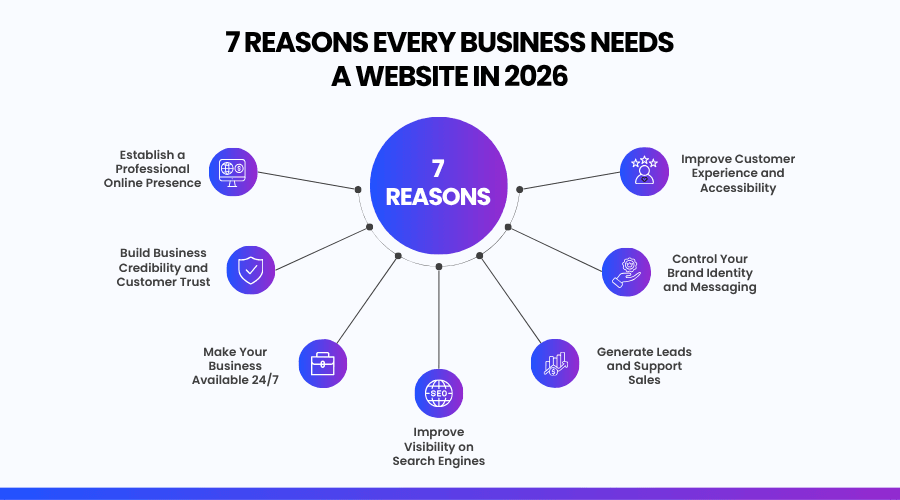
1. Establish a Professional Online Presence
One of the primary reasons businesses invest in website development is to establish a professional online presence. Customers often want to know who a company is, what it offers, and how they can contact it before making a decision.
A website gives businesses an opportunity to present their brand through a consistent design, clear messaging, service information, and relevant business details.
For small businesses and startups, a professional website can help communicate their offerings and make important information easier to access. Established companies can use their websites to organize their services, publish updates, and strengthen their digital identity.
When considering why businesses need a professional website, it is important to understand that professionalism involves more than appearance. Website performance, accurate information, usability, security, and accessibility all contribute to the visitor experience.
A well-maintained website can support customer confidence, but businesses should also ensure that their actual service quality matches the expectations created online.
2. Build Business Credibility and Customer Trust
Customers may hesitate to contact a business when they cannot find reliable information about it online. A website provides a space to explain your business, share relevant information, and answer common customer questions.
Businesses can strengthen their online credibility by including:
- A clear About Us section
- Detailed service or product pages
- Contact information
- Customer testimonials, where genuine and authorized
- Portfolio or case study examples
- Frequently asked questions
- Privacy policy and other relevant legal information
A website can help communicate reliability by making essential details easy to find. For example, a service provider can explain its process, display previous work, and provide a clear way for customers to request information.
However, a website should not make unsupported claims or present misleading testimonials. Trust develops through accurate communication, transparent business practices, and consistent customer experiences.
This is another reason why your website matters: it influences how people access and evaluate information about your business before they decide to engage with you.
3. Make Your Business Available 24/7
A physical business location may have specific operating hours, but a website allows customers to access important information at any time. Visitors can explore services, review products, read frequently asked questions, or submit inquiries outside regular business hours.
For example, a customer searching for website development services at night may visit a company’s website to learn about its offerings and complete a contact form. The business can review the inquiry and respond during its working hours.
This availability can make the customer journey more convenient and reduce dependence on real-time communication for basic information.
A website does not mean that every business operates continuously or provides immediate support. Instead, it gives customers a way to access information and initiate communication whenever it suits them.
For eCommerce businesses, a website can also support online shopping, although order processing, customer support, and delivery operations may still follow specific schedules.
4. Improve Visibility on Search Engines
A website is an important foundation for search engine optimization (SEO). Businesses can create pages that target relevant search queries and provide useful information to potential customers.
For instance, a company offering marketing services may develop dedicated pages for SEO, Google Ads, social media marketing, and eCommerce marketing. These pages help explain the company’s services and provide search engines with information about the website’s content.
SEO involves several activities, including:
- Keyword research
- Technical website optimization
- Content development
- Internal linking
- Website performance improvements
- Local SEO, where relevant
- Search intent analysis
A website alone does not guarantee higher rankings. Search visibility depends on competition, content quality, technical factors, authority, and other search engine considerations.
Still, having a well-structured website creates opportunities to build organic visibility over time. Businesses that understand why website is important for business should consider its role in attracting customers through search engines, not just its visual appearance.
5. Generate Leads and Support Sales
A website can help businesses turn online visitors into potential customers by providing clear conversion opportunities. Depending on the business model, these conversions may include submitting a form, requesting a quote, booking a consultation, calling the business, or purchasing a product.
A lead-generation website should make it easy for visitors to understand what the company offers and what action they should take next.
Useful conversion elements include:
- Clear calls to action
- Service-specific landing pages
- Simple contact forms
- Visible contact information
- Relevant trust signals
- Detailed product or service descriptions
- Easy navigation
For example, a web development agency can include a “Request a Quote” button on its service pages. A local business may use a phone number, inquiry form, and location information to help customers get in touch.
The effectiveness of a website depends on factors such as visitor intent, pricing, offer relevance, design, and business responsiveness. A professional website supports conversion opportunities, but it cannot guarantee a specific number of leads or sales.
6. Control Your Brand Identity and Messaging
Social media platforms and online directories can help businesses reach customers, but businesses have limited control over how these platforms display information and change their features.
A website gives your company a dedicated space to present its brand identity, messaging, services, and visual style.
Businesses can control important elements such as:
- Brand colors and typography
- Website layout and navigation
- Service descriptions
- Visual content
- Company messaging
- Calls to action
- Customer information resources
This control allows companies to build a more consistent digital experience across their website and other marketing channels.
When considering why your website matters, brand ownership is an important factor. Your website can serve as the primary destination for visitors who discover your business through search engines, social media, advertisements, or referrals.
The website should complement other channels rather than replace every marketing platform. A coordinated online presence can help customers access information through the channels they prefer.
7. Improve Customer Experience and Accessibility
A website should be designed to help visitors find information quickly and complete tasks with minimal confusion. Poor navigation, slow-loading pages, unclear text, and difficult forms can create unnecessary barriers.
In 2026, businesses should prioritize a user experience that works across desktop computers, tablets, and mobile devices.
Important considerations include:
- Responsive design
- Readable typography
- Logical navigation
- Fast-loading pages
- Clear content structure
- Accessible buttons and forms
- Descriptive headings and links
- Easy-to-find contact information
Mobile optimization is particularly important because many users access websites through smartphones. However, the ideal design should accommodate different screen sizes and user needs.
A positive user experience can help visitors engage with content and complete desired actions. It also supports the broader purpose of website development: providing useful information through a convenient and reliable digital platform.
Website Must-Haves: Essential Features Every Business Website Needs
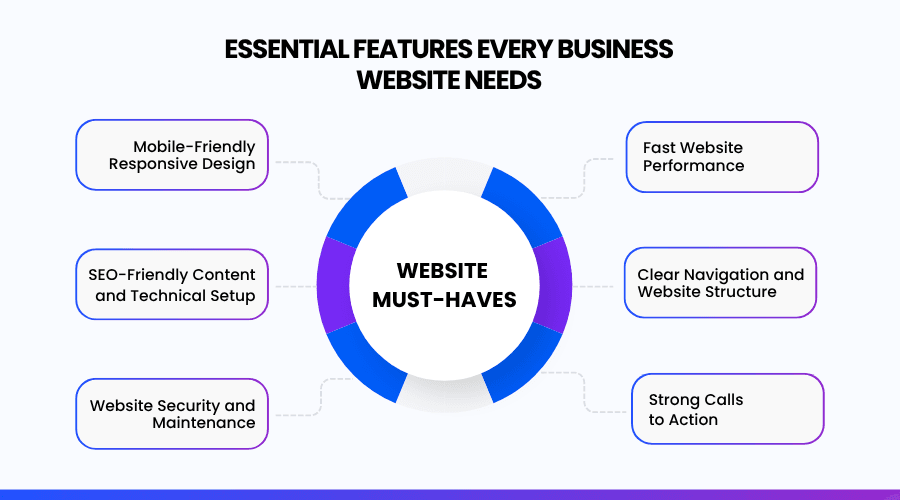
When developing a business website, certain features should be considered essential rather than optional design additions. These website must haves help support usability, trust, security, and marketing objectives.
The exact requirements depend on the business type, website size, audience, and functionality.
1. Mobile-Friendly Responsive Design
Your website should adapt to different screen sizes and remain easy to use on smartphones, tablets, and desktop computers. Responsive design helps ensure that text, images, navigation, and buttons display appropriately across devices.
A mobile-friendly website also supports users who access your business through mobile search, social media links, and advertising campaigns.
2. Fast Website Performance
Website speed affects user experience and can influence how visitors interact with your pages. Large images, unnecessary scripts, poor hosting configurations, and inefficient code can slow down a website.
Businesses should consider image optimization, caching, appropriate hosting, and performance monitoring to improve loading times.
Speed optimization should be based on actual testing rather than assumptions. Tools such as Google PageSpeed Insights can help identify performance opportunities.
3. Clear Navigation and Website Structure
Visitors should be able to find important information without navigating through confusing menus. A clear structure may include the following pages:
- Home
- About Us
- Services or Products
- Portfolio or Case Studies
- Blog or Resources
- Contact Us
- Privacy Policy
Not every business requires all these pages. The structure should reflect the company’s goals and the information its audience needs.
4. Strong Calls to Action
Calls to action guide visitors toward relevant next steps. Examples include “Contact Us,” “Get a Quote,” “Book a Consultation,” and “Shop Now.”
The CTA should match the page content and the visitor’s likely intent. A service page may encourage an inquiry, while a product page may focus on purchasing.
5. Website Security and Maintenance
Security is an important part of running a professional website. Businesses should use HTTPS, keep their content management system and plugins updated, and maintain suitable backups and access controls.
Websites also require ongoing maintenance to address broken links, software updates, performance problems, and outdated information.
Security practices should be appropriate to the website’s functionality and the type of data it handles.
6. SEO-Friendly Content and Technical Setup
A website should have a logical structure, relevant page titles, descriptive headings, useful content, and appropriate technical configuration.
SEO-friendly development may include:
- Search engine crawl accessibility
- Descriptive title tags and meta descriptions
- Proper heading hierarchy
- Internal linking
- Descriptive image alt text
- XML sitemap configuration where appropriate
- Canonicalization when required
- Structured data when relevant
These elements help search engines understand website content and can support discoverability. They do not guarantee search rankings.
The Advantages of Website Development for Businesses
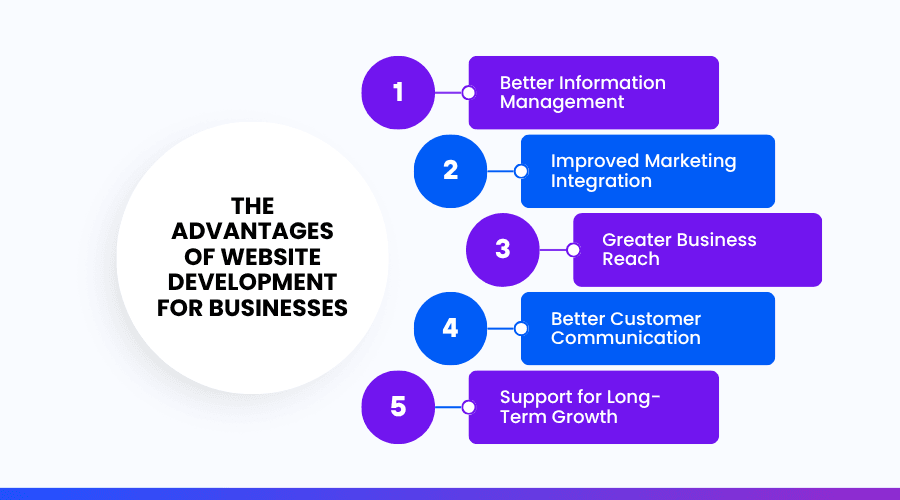
A professionally developed website can offer several benefits that support marketing, customer communication, and business operations. Understanding the advantages of website development helps business owners evaluate why investing in a website may be valuable for their specific needs.
Better Information Management
A website allows businesses to organize service details, product information, pricing information where applicable, contact details, and frequently asked questions in one location.
This can reduce the need to repeat basic information across different communication channels.
Improved Marketing Integration
Websites can connect with SEO, paid advertising, social media campaigns, email marketing, and analytics tools. For example, an advertising campaign can direct users to a dedicated landing page designed for a specific offer.
A connected marketing setup helps businesses evaluate how different channels contribute to website visits, inquiries, and other actions.
Greater Business Reach
A website can make business information accessible to people outside the company’s immediate location. This can be useful for businesses offering remote services, digital products, eCommerce deliveries, or international solutions.
The reach of a website still depends on marketing, search visibility, language, market demand, and the business’s ability to serve customers.
Better Customer Communication
A website can provide multiple ways for visitors to contact a business, including inquiry forms, email addresses, phone numbers, and booking tools.
Clear communication options can help customers understand how to request assistance or begin a business relationship.
Support for Long-Term Growth
A website can evolve as a business grows. Companies may add new service pages, improve content, integrate booking systems, launch eCommerce features, or expand their marketing activities.
This flexibility makes website development a potential long-term investment, provided the website is maintained and updated according to business requirements.
What Are the Goals of a Website?
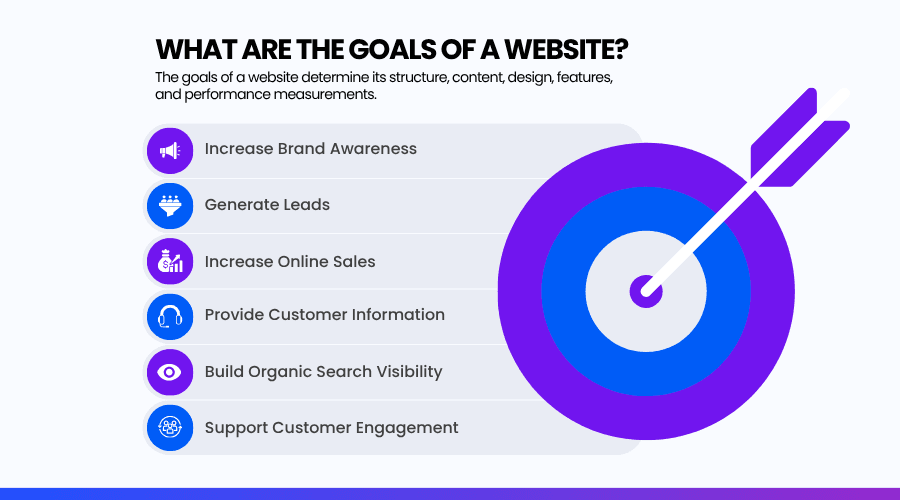
Before developing a website, businesses should define what they want it to achieve. The goals of a website determine its structure, content, design, features, and performance measurements.
A business website may have one primary goal or several connected objectives.
Goal 1: Increase Brand Awareness
A website can introduce a business to potential customers and explain its services, products, values, and areas of expertise.
Goal 2: Generate Leads
A lead-generation website focuses on encouraging visitors to submit inquiries, request quotes, schedule consultations, or contact the business.
Goal 3: Increase Online Sales
For eCommerce businesses, the website may focus on product discovery, shopping, checkout, payment processing, and order management.
Goal 4: Provide Customer Information
Some websites primarily help customers find answers, product details, service information, policies, and support resources.
Goal 5: Build Organic Search Visibility
Businesses may use SEO-focused content and technical optimization to increase opportunities for relevant search traffic.
Goal 6: Support Customer Engagement
Websites can provide educational content, newsletters, resources, and other features that encourage ongoing engagement.
The goals of a website should be specific enough to guide decisions and measurable where possible. For example, a business may aim to increase qualified inquiries, improve product purchases, or reduce customer questions about basic services.
Website goals should be reviewed regularly as business priorities change.
Why Businesses Need a Professional Website Instead of Relying Only on Social Media
Social media is an important part of digital marketing, but relying exclusively on social platforms can create limitations. Businesses operate within the rules and features of third-party platforms, which may change over time.
A website provides a dedicated digital destination that the business can manage and develop according to its needs.
Here is a comparison:
| Feature | Business Website | Social Media Profile |
| Brand presentation | Greater control over design and content structure | Follows platform design and rules |
| Content organization | Custom pages and navigation | Platform-specific feed and profile structure |
| Search visibility | Can be optimized for relevant search queries | Depends on platform and search features |
| Lead generation | Custom forms, landing pages, and integrations | Platform-specific messaging and lead tools |
| Ownership | Business manages its website and hosting arrangements | Operates within a third-party platform |
| eCommerce | Can support customized shopping experiences | Depends on platform functionality and availability |
This comparison does not mean that websites and social media serve identical purposes. Both can be useful, and their suitability depends on the business’s audience and objectives.
The question of why businesses need a professional website becomes particularly relevant when a company wants more control over its online information, customer journey, and marketing infrastructure.
How to Plan a Website for Your Business in 2026
A successful website project begins with planning. Before choosing a design or development platform, businesses should identify their audience, goals, content requirements, and technical needs.
Step 1: Define Your Business Objectives
Determine what the website should help you achieve. Do you want to generate leads, sell products, showcase services, provide information, or build brand awareness?
Clear objectives make it easier to select the right features and evaluate results.
Step 2: Understand Your Target Audience
Research your customers’ needs, common questions, online behavior, and expectations. Consider what information they need before contacting your business or making a purchase.
Audience research can help shape your website content, navigation, and calls to action.
Step 3: Plan the Website Structure
Create a sitemap that outlines the key pages and how they connect. Organize content logically so visitors can access relevant information without unnecessary steps.
Step 4: Select the Right Development Approach
Businesses may choose from platforms such as WordPress, Shopify, or custom development, depending on their requirements.
The right option depends on factors including budget, functionality, scalability, maintenance, and technical needs.
Step 5: Optimize for Search and User Experience
Build clear page structures, useful content, responsive layouts, and appropriate technical SEO elements. Test the website on different devices before launch.
Step 6: Monitor and Improve Performance
After launch, review website analytics, search performance, conversion data, and user feedback. Use these insights to identify areas for improvement.
A website should be treated as an ongoing business asset rather than a one-time project.
Why Choose Innovatek Solutions for Website Development?
At Innovatek Solutions, we understand that a business website should do more than display information. It should provide a clear online experience that supports your business objectives and connects with your target audience.
Our website development approach focuses on creating functional, user-friendly, and professionally presented websites based on each client’s requirements.
Our digital solutions may include:
- Business and corporate website development
- WordPress website development
- eCommerce website development
- Shopify store setup and development
- Landing page development
- Responsive website design
- Website content structure and optimization
- Basic website SEO integration
- Website performance and usability improvements
We consider your industry, audience, website goals, and required functionality when planning a project. Our team combines website development, SEO, content, and digital marketing knowledge to support businesses looking to strengthen their online presence.
Whether you are launching a new business or improving an existing website, we can help you evaluate your requirements and identify a suitable development approach.
Final Thoughts on Why Your Business Needs a Website in 2026
A website is an important digital asset for businesses that want to establish an online presence, communicate with customers, and support their marketing activities. It provides a central location for presenting services, products, company information, and conversion opportunities.
The advantages of website development include greater control over brand presentation, improved customer access to information, opportunities for search visibility, and integration with digital marketing campaigns. However, the results depend on website quality, ongoing maintenance, marketing strategy, and the business’s ability to meet customer needs.
Understanding why your website matters helps you make better decisions about your online presence. A website should be designed with clear objectives, useful content, responsive functionality, and an experience that supports visitors.
If you are planning a new website or want to improve your existing online presence, Innovatek Solutions can help you explore website development and digital solutions based on your business requirements.
Contact Innovatek Solutions today to discuss your website project and build a stronger digital foundation for your business in 2026.
Frequently Asked Questions (FAQs)
1. Why is a website important for business in 2026?
A website helps businesses present their services or products, provide essential information, support digital marketing, and create opportunities for customer inquiries or sales. Its value depends on the website’s quality and how well it supports business objectives.
2. Why do businesses need a professional website?
Businesses need a professional website to establish a dedicated online presence, organize important information, communicate credibility, and provide a convenient customer experience. A professional website should combine design, functionality, security, and relevant content.
3. What are the essential website must-haves for a business?
Important website must-haves include responsive design, clear navigation, fast performance, relevant content, secure connections, contact information, strong calls to action, and basic SEO-friendly structure. Additional features depend on the business’s requirements.
4. What are the main advantages of website development?
The advantages of website development include improved control over online branding, customer information access, lead-generation opportunities, marketing integration, and potential search visibility. Results depend on implementation and ongoing management.
5. What should be the goals of a website?
The goals of a website may include increasing brand awareness, generating leads, selling products, providing customer support information, and supporting search engine visibility. Businesses should define goals based on their specific needs.
6. Can Innovatek Solutions develop a website for my business?
Yes. Innovatek Solutions provides website-related digital solutions, including business websites, WordPress development, eCommerce and Shopify store setup, landing pages, and website optimization. The appropriate service depends on your project requirements.